
25 mL Glass Conical Flasks – Small-Volume Erlenmeyer Flasks
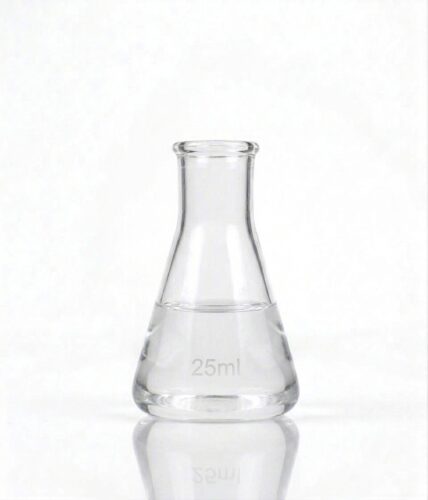
25 mL Glass Conical Flasks deliver a practical and efficient vessel solution for micro-scale titrations, small-batch reagent preparation, chemical reactions, and controlled sample incubation. The iconic conical (Erlenmeyer) geometry allows for smooth, one-handed mixing without the risk of liquid spillage, making them ideal for precise analytical procedures. Designed with uniform wall thickness and a flat, balanced base, these flasks ensure optimal heat distribution when placed on hot plates or water baths. Their narrow neck compatible with standard stoppers and cotton plugs helps minimize evaporation and sample contamination during routine benchtop operations throughout Pakistan.
Key Applications:
-
Small-Volume Titration: Ideal for acid-base and redox micro-titrations where splash containment and clear endpoint observation are required.
-
Reagent Mixing & Storage: Suited for preparing small reagent volumes, mixing sensitive solutions, and temporary liquid holding.
-
Educational & Research Experiments: Used widely in academic chemistry labs for qualitative analysis, micro-scale reactions, and general science demonstrations.
Specifications & Properties:
-
Product Name: 25 mL Glass Conical Flask / 25 mL Erlenmeyer Flask
-
Nominal Capacity: 25 mL working volume (with graduations up to max fill line)
-
Material Composition: Heat-resistant laboratory glass
-
Style/Design: Classic narrow-neck Erlenmeyer pattern with flat base, conical body, and heavy-duty reinforced rim
-
Graduation Markings: Permanent white ceramic enamel graduation scale with approximate volume increments
-
Thermal Tolerance: Designed for standard laboratory heating, water baths, and routine thermal applications
-
Chemical Resistance: High inertness against acids, bases, organic solvents, and biological reagents
-
Packaging Options: Individual protective wrapping or inner pack boxes of 10 or 12 units
-
Storage Conditions: Store on flat, stable shelves or drying racks protected from physical impact.
Safety & Handling:
-
Hazard Class: Non-hazardous laboratory glassware prior to use. Thermal burn hazard when heated; laceration hazard if cracked or broken.
-
Handling & Usage: Inspect for cracks or chips before heating. Heat uniformly using hot plates or water baths; avoid direct flame exposure without wire gauze support.
-
Disposal: Dispose of cracked or broken glassware in rigid glass waste disposal containers or designated sharps bins per laboratory safety regulations.+